California Debt Collection Laws
Upsolve is a nonprofit that helps you eliminate your debt with our free bankruptcy filing tool. Think TurboTax for bankruptcy. You could be debt-free in as little as 4 months. Featured in Forbes 4x and funded by institutions like Harvard University — so we’ll never ask you for a credit card. See if you qualify →
California has two important laws — the Rosenthal Act and the Debt Collection Licensing Act — that protect California residents against original creditor and third-party debt collector harassment and abuse. Californians also benefit from the federal Fair Debt Collection Practices Act, which offers many protections and gives you certain rights. The statute of limitations for most consumer debt is four years in California.


Written by the Upsolve Team. Legally reviewed by Attorney Andrea Wimmer
Updated March 12, 2026
section What Are the Debt Collection Laws in California?
If you're dealing with debt collectors in California, rest assured that the state offers strong legal protections to make sure you're treated fairly — whether the collector is a third-party agency or the original creditor.
🛡️ Three main debt collection laws help protect Californians from unfair or abusive collection practices:
A California law called the Rosenthal Fair Debt Collection Practices Act
Another California law called the Debt Collection Licensing Act
A federal law called the Fair Debt Collection Practices Act (FDCPA)
These laws work together to set clear limits on what debt collectors can and can’t do. The Rosenthal Act gives you extra protection by covering not just debt collectors, but also the original creditors you owe money to. California’s licensing law requires debt collectors to be registered with the state and follow state rules.
🏠 Another important protection under the Rosenthal Act is that it treats foreclosure as a form of debt collection. This means its rules also apply when someone tries to collect mortgage debt through foreclosure — something the federal FDCPA doesn’t cover.
🔍 Let’s take a closer look at how each of these laws protects you in California.
California’s Rosenthal Fair Debt Collection Practices Act
The Rosenthal Fair Debt Collection Practices Act is California’s version of the federal FDCPA. But it has even stronger protections and applies more broadly. It was created to protect consumers from harassment, threats, and other unfair debt collection tactics.
While the federal FDCPA only applies to third-party debt collectors, California’s law also covers original creditors — like banks, hospitals, or utility companies trying to collect a debt directly.
📄It also applies to people who create and sell debt collection forms and letters.
California’s Debt Collection Licensing Act
The other state law protecting Californians further is the Debt Collection Licensing Act, which requires most debt collectors doing business in California to be licensed by the state.
🪪 Collectors also have to follow certain rules, including adding their license number to any digital or written messages they send to you. The law also creates a system for ongoing oversight and reporting.
To learn more about how this protects consumers, check out the section titled California Requires Debt Collectors To Be Licensed.
The Federal Fair Debt Collection Practices Act (FDCPA)
The federal Fair Debt Collection Practices Act (FDCPA) protects people across the U.S. (including Californians) from harassment, threats, and other unfair behavior by third-party debt collectors. It gives consumers important rights and sets limits on what collectors can do when trying to collect a debt.
This graphic gives a quick snapshot of what the FDCPA does and who it protects:
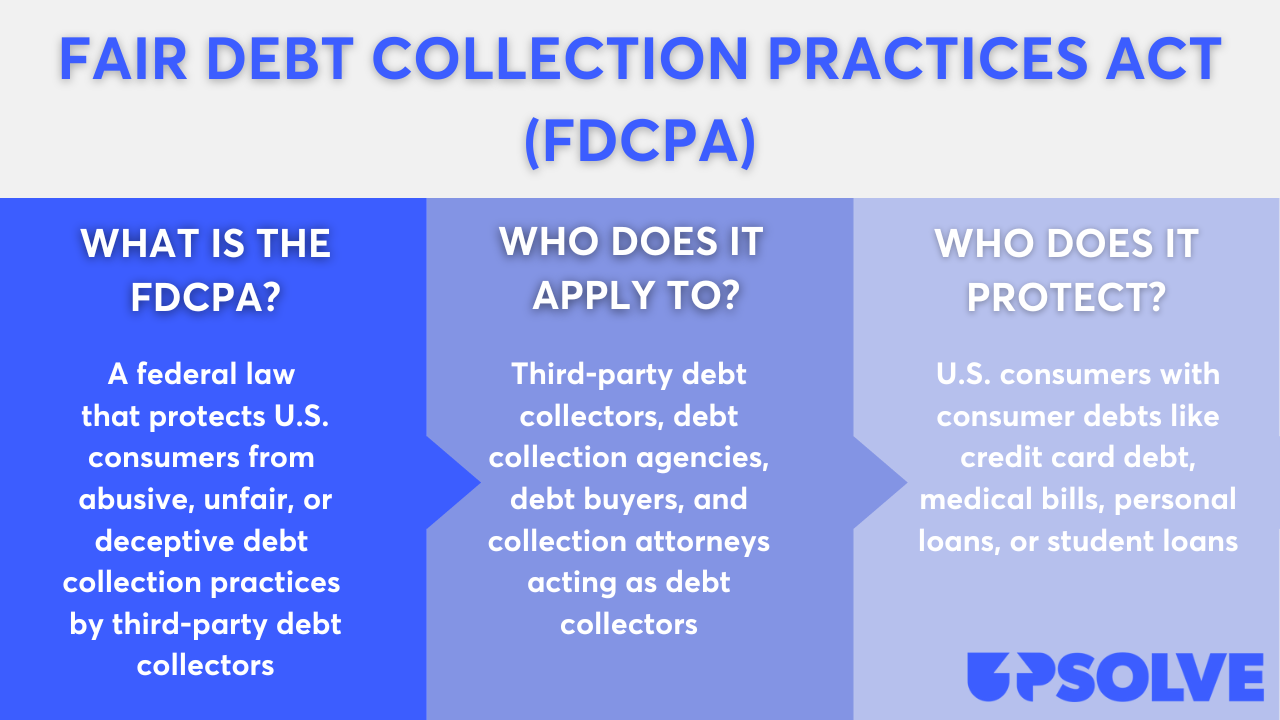
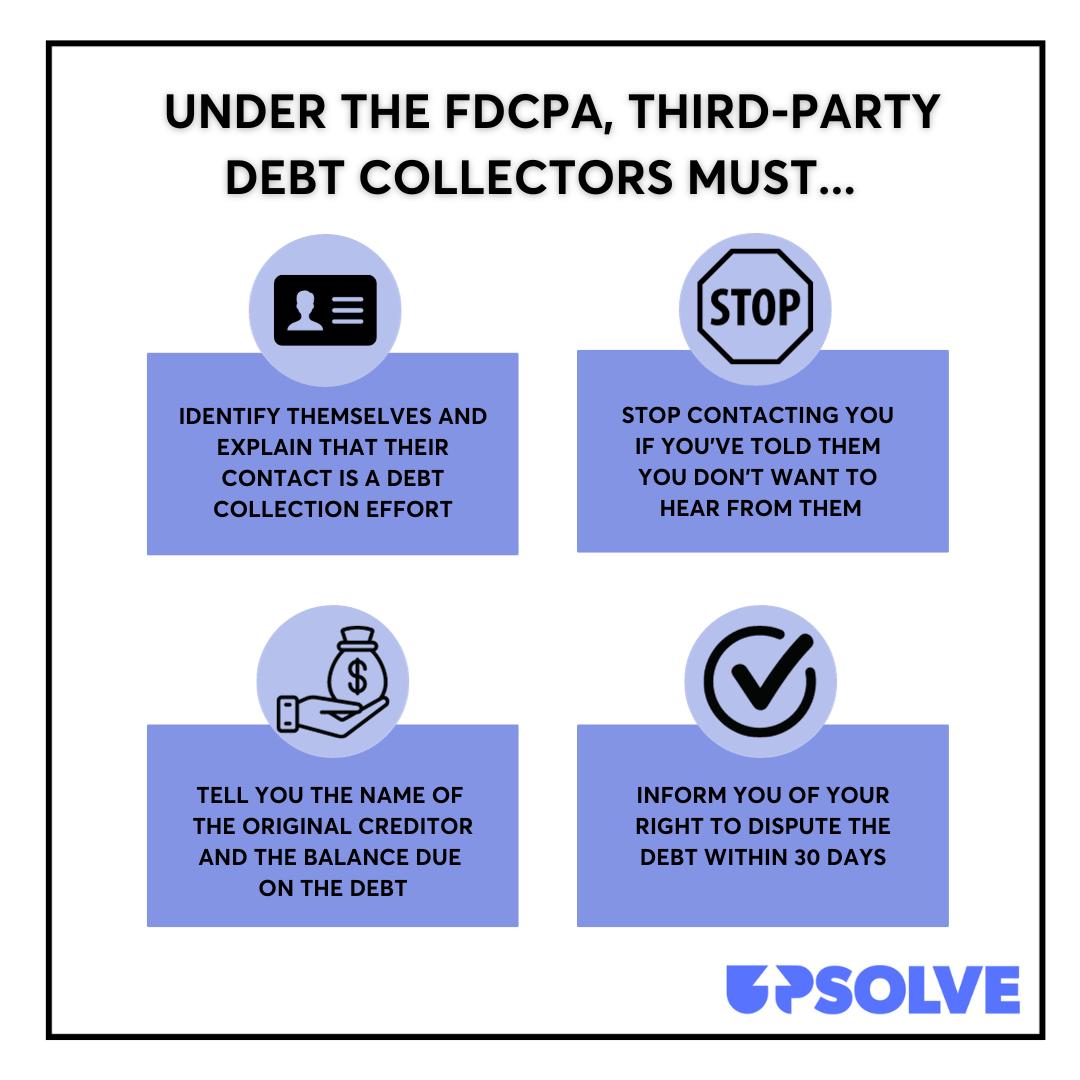
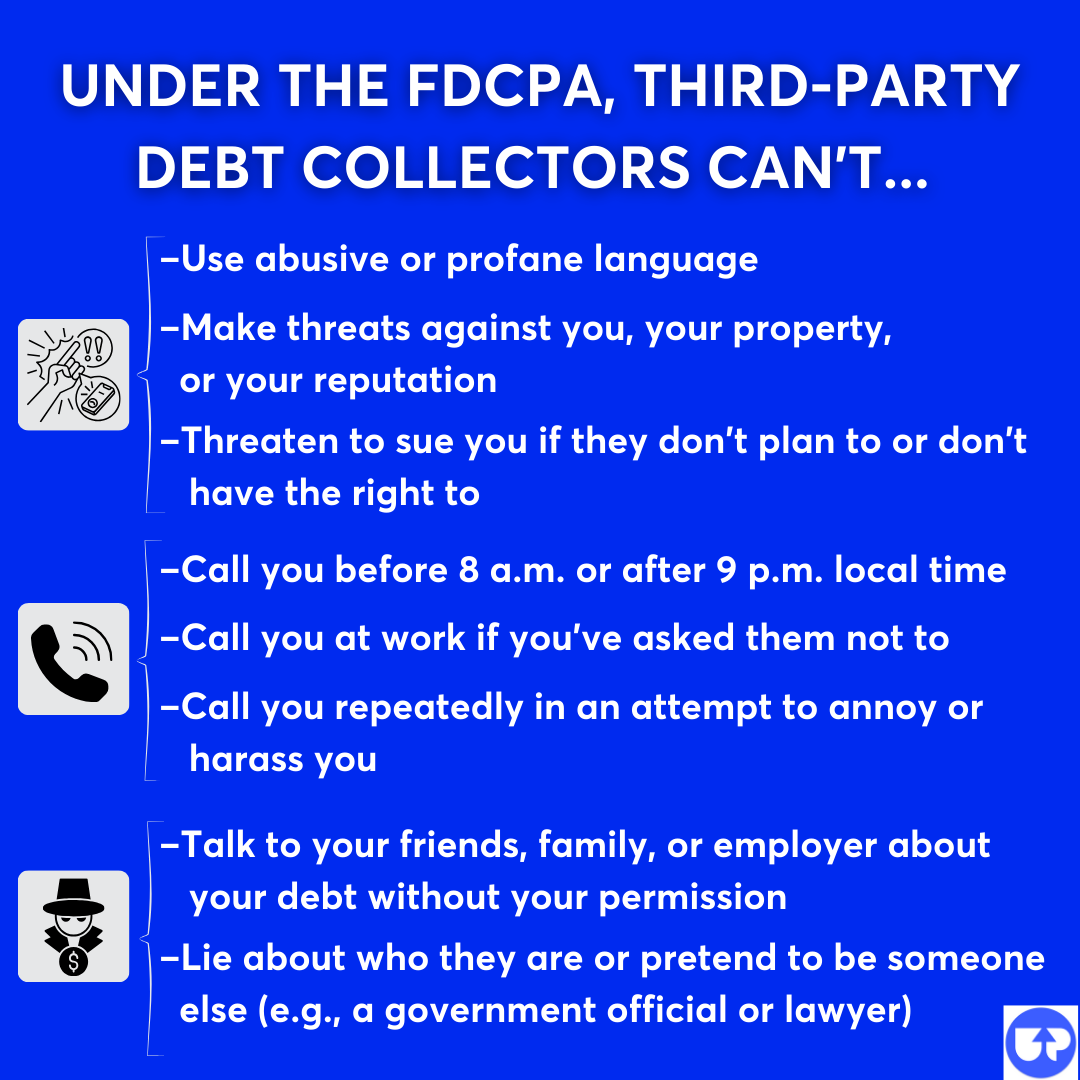
The FDCPA lays out clear rules for debt collectors — including what they must do and what they’re not allowed to do.
California Requires Debt Collectors To Be Licensed
As part of California’s Debt Collection Licensing Act, most debt collectors must be licensed to operate in the state.
📩 Collectors are legally required to include their license number in any written or digital communication, like emails, letters, or social media messages. This number must be easy to see and written in at least 12-point font (not hidden in fine print).
☎️ When a collector contacts you by phone, you have the right to ask for their license number. If you do, it’s a good idea to write down the caller’s name, the date and time, and what was said.
Asking for a license number can help you spot scams and report collectors who aren’t following the rules. If you're sending a debt verification letter to dispute or learn more about a debt, you can include a request for their license number there, too.
⚠️ If a debt collector doesn’t properly identify themselves or provide their license number, this could be important, especially if they later file a lawsuit against you. You can also report them to state agencies, as explained in the next section.
What You Can Do if a Debt Collector Breaks the Law in California
Harassment, offensive language, repeated contact, or failure to follow basic legal requirements (like identifying themselves properly) may be violations of state or federal law. If you're experiencing this, you have options.
Many people choose to file a complaint with a government agency. Others consider legal action, especially if the collector’s behavior caused emotional distress, financial problems, or other real-life consequences.
How To File a Complaint Against a Debt Collector
You can report violations of the FDCPA or California’s Rosenthal Act to a state or federal agency (or both). Taking this step can lead to investigations and help protect other consumers, too.
Many people start by filing a complaint with the California Attorney General’s Office, which handles consumer issues involving businesses. The online form asks for details about the debt collector, what happened, and any supporting documents you may have.
🏥 If your issue involves disputed or fraudulent medical debt in California, you can also contact the state agencies that oversee health insurance providers — especially if related to a managed care plan or PPO.
Additionally, you can report the collector to the Consumer Financial Protection Bureau (CFPB). This federal agency enforces debt collection laws nationwide and works closely with the Federal Trade Commission (FTC). You can submit a complaint directly through the CFPB’s website.
🗣️ You might wonder if it’s worth the time to submit a complaint, but sharing your experience can make a real difference. Consumer protection laws often change in response to public complaints.
How To Sue a Debt Collector That Breaks the Law
⚖️ Some people choose to file a lawsuit if a debt collector breaks the law. In California, you may be able to sue both third-party collectors and original creditors under the Rosenthal Act. Under the federal FDCPA, lawsuits can only be brought against third-party debt collectors — not the original creditor.
If the court finds that the debt collector broke the law, you may be able to recover actual damages, which can include things like lost wages or emotional distress. In some cases, courts also award statutory damages of up to $1,000, along with attorney fees and court costs.
Because of what's at stake, many people in this situation choose to talk with a consumer law attorney. Some attorneys handle these cases on a contingency basis, which means you don’t pay anything up front. They only get paid if you win or settle the case.
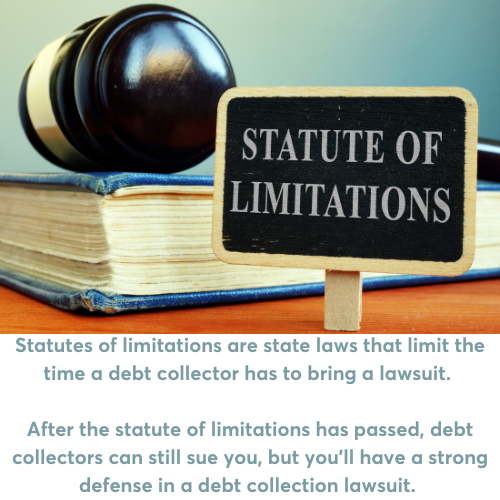
In California, there are laws that limit how long a debt collector or creditor has to sue you for an unpaid debt. These time limits are called statutes of limitations, and they’re outlined in California’s Civil Code.
For most consumer debts — like credit card debt, medical bills, or auto loans — collectors have four years from the date of your last payment to file a lawsuit. For mortgage debt or personal loans, the time limit is six years.
After this window closes, the debt is considered time-barred, which means you can’t be sued for it. However, that doesn’t always stop debt collectors from trying to collect. They’re still allowed to call you, send letters, and report the debt to credit bureaus unless you tell them to stop.
📝 If you don’t want to be contacted about an old debt, you can send a cease and desist letter asking the collector to stop reaching out.
A Word of Caution About Restarting the Statute of Limitations
🕒 In some cases, your actions can restart the statute of limitations on a debt. Typically, the clock begins when you default, but this can vary depending on the type of debt and the terms of your contract. If you acknowledge the debt, make a partial payment, or agree to a new payment plan, the time limit may reset.
If you think the debt is old enough to be time-barred (past the statute of limitations), it’s best to get legal advice from an attorney before you give information or agree to anything with a creditor or debt collector.
What Are Debt Collectors Allowed To Do To Collect Debt in California?
Even though strong federal and state laws protect you from illegal or aggressive collection tactics, debt collectors still have legal ways to try to pursue unpaid debts, including filing a lawsuit.
Before taking legal action, most collectors will try to contact you repeatedly, often for months, to resolve the debt. If that doesn’t work, they may sue. In that case, you’ll receive a summons and complaint, which are legal documents that explain the claim against you and what you need to do next.
⚠️ It’s important to respond to the summons, even if you can’t afford a lawyer. Ignoring it can lead to a default judgment, which gives the collector legal authority to collect the debt through the court.
If a debt collector wins a court judgment, they may be able to:
Garnish your wages, which allows them to take money directly from your paycheck
Levy your bank account, which allows them to withdraw funds directly from your bank account
Place a lien on your property, which can affect your ability to sell or refinance your home
🚗 If the debt is tied to a car loan, they may also be able to repossess your vehicle.
If you’ve been sued in California, this guide will help you respond to the court summons on your own.
If you're worried about responding on your own, but you can't afford a lawyer, you can draft an answer letter for a small fee using Solo. They've helped hundreds of thousands of people respond to debt lawsuits, and they have a 100% money-back guarantee.
Solo is an affiliate partner, which means Upsolve may earn a small commission if you choose to use their paid service. This helps keep our services free.
Need Help With Debt Relief? Here Are Some Options
Consumer debt, like credit card debt and medical bills, is on the rise. If you’re feeling bogged down by spiraling debt, you're not alone. But if you take action now, you can prevent bigger problems in the future.
One good first step is to speak with a nonprofit credit counseling agency. These organizations offer free sessions where you can review your finances, talk through your challenges and goals, and get personalized recommendations. Depending on your situation, they might suggest a debt management plan, debt consolidation, or in some cases, bankruptcy.
If you’re dealing with a legal issue related to debt — like being sued or facing wage garnishment — you may also qualify for free or low-cost legal help through a local legal aid organization.